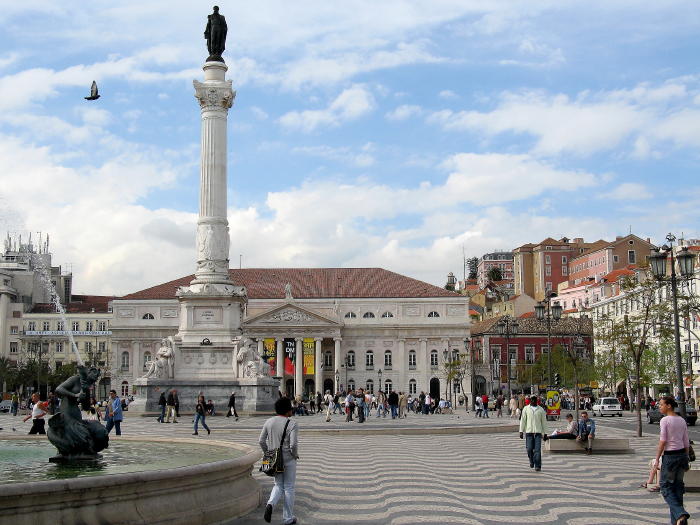
Lisbon is the oldest capital city in western Europe, predating London, Paris, and Madrid by centuries. It sits on seven hills above the Tagus estuary, its streets too steep for most of the walking styles that work in other cities.
The trams, the miradouros (viewpoints), and the sheer physical geography of the place force a different pace: slower, more vertical, more rewarding. Three days is enough to understand why people who visit tend to come back.
How Lisbon
is organised.
The city divides roughly into the Baixa (the flat, earthquake-rebuilt lower city), the Alfama (the Moorish hill to the east, the oldest neighbourhood), Chiado and Bairro Alto (the cultured and bohemian hill to the west), and Belem (the monumental riverside quarter five kilometres west). Sintra is 40 minutes by train from Rossio station.
The Metro covers the main areas quickly. In the old city, trams and funiculars are part of the experience rather than just a means of transport. Walking is rewarding but the hills are genuinely steep: pacing yourself matters more here than in most European capitals.
The Baixa, Alfama,
and the Castle.
Start at Praca do Rossio. This has been the public square at the heart of Lisbon since the 13th century. The earthquake of 1755 destroyed most of the city, but the square's location survived and was rebuilt as part of the Pombaline reconstruction. The grid of streets extending south toward the river, the Baixa Pombalina, was built as one of the first examples of earthquake-resistant urban planning in Europe, with flexible wooden structures inside the stone facades.
The Convento do Carmo, higher up the hill, was never rebuilt after the earthquake. The Gothic arches of the roofless nave now frame the sky: a deliberate ruin, left as a memorial to 1755. The Elevador de Santa Justa, a Gothic Revival iron lift designed by Raoul Mesnier du Ponsard and opened in 1902, connects the Baixa to the Chiado level.
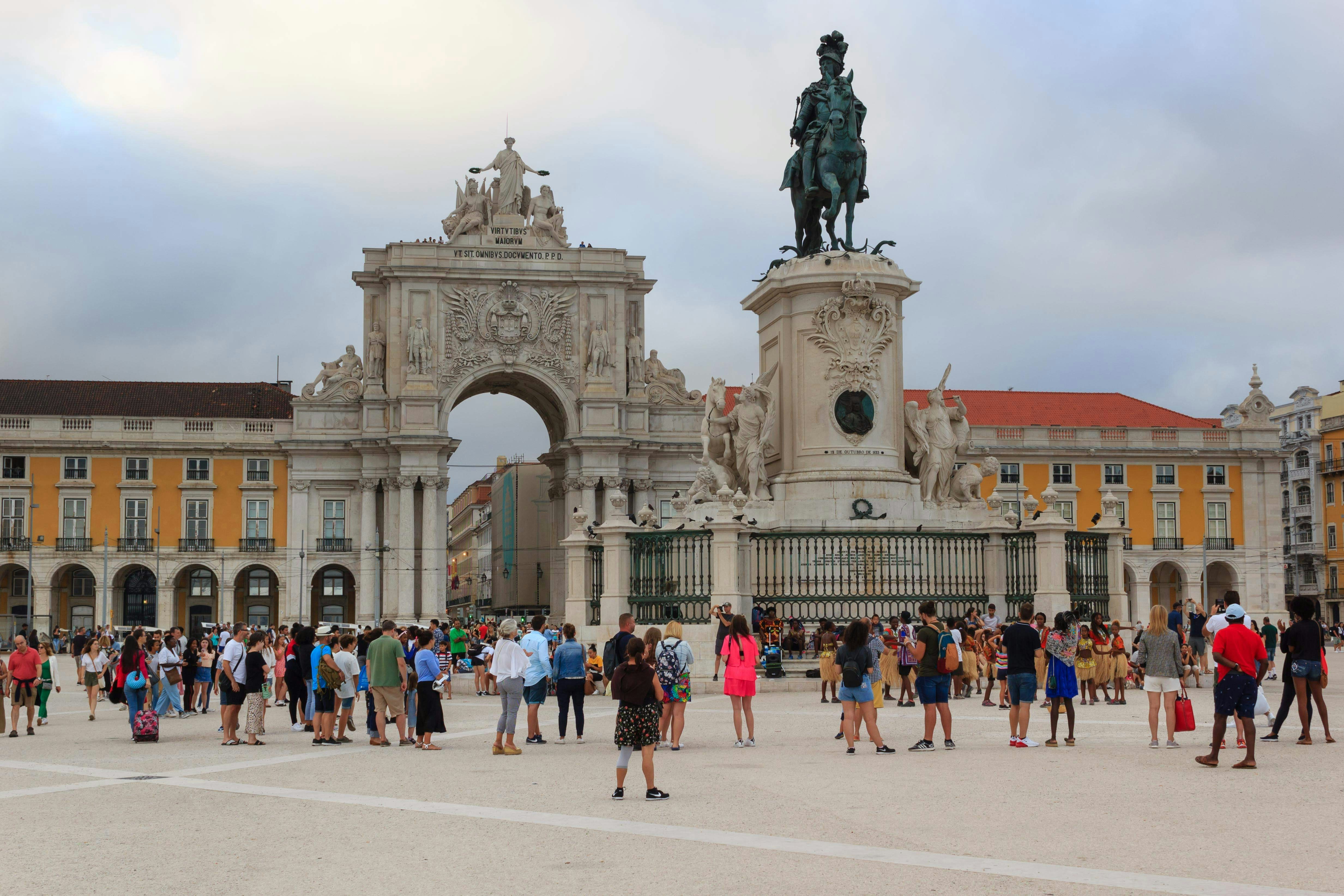
Walk down to Praca do Comercio, the great riverside square that was the commercial gateway of the Portuguese empire. Ships docked here, goods were weighed and taxed here, the king rode through the Rua Augusta arch. The Se Cathedral, the oldest building in Lisbon, was begun in 1147, the same year the city was taken from the Moors.
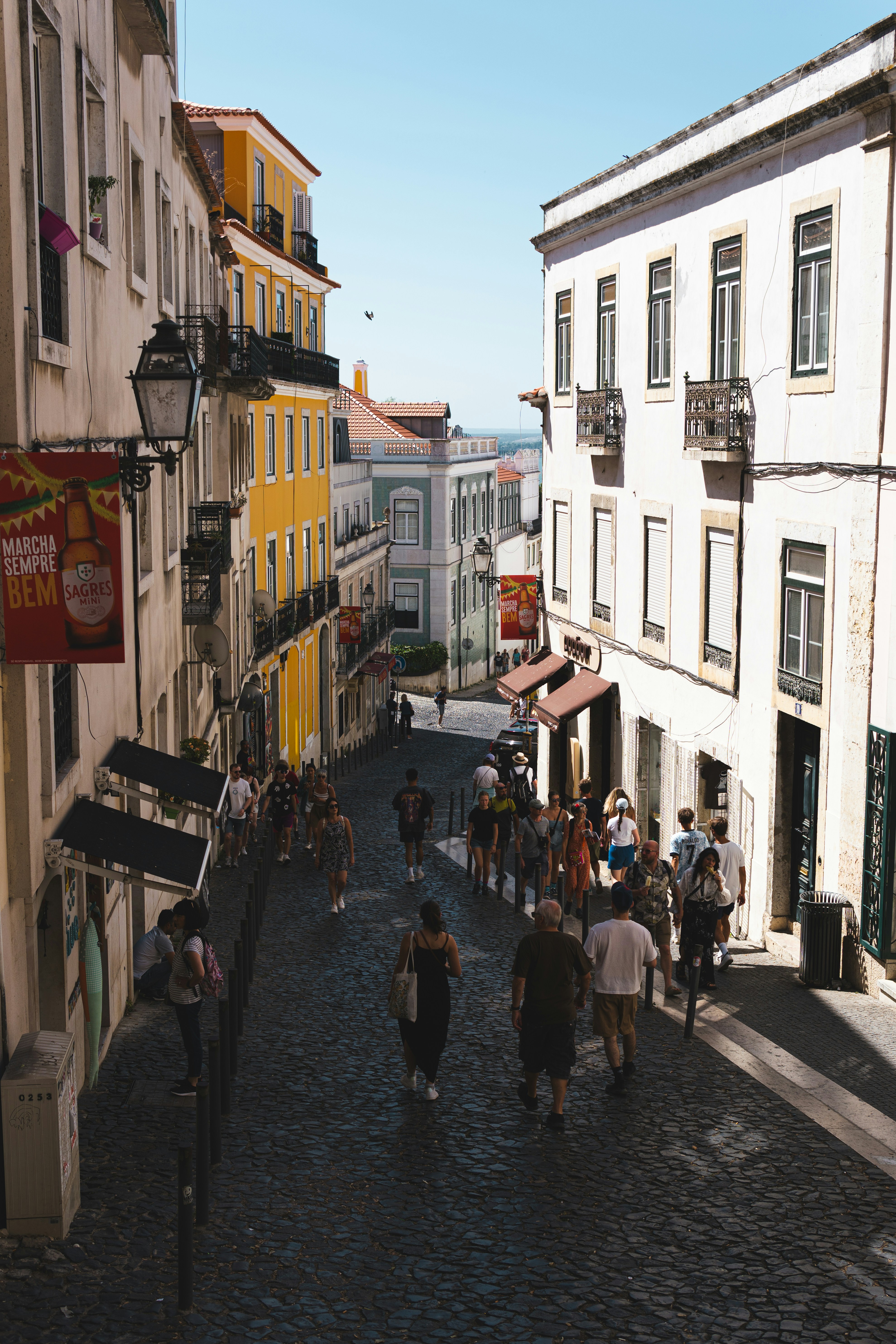
Up through the Alfama neighbourhood, one of the few parts of Lisbon that predates the earthquake, with its narrow Moorish street plan intact. The Miradouro de Santa Luzia has the best view over the rooftops and the Tagus from the lower part of the Alfama. Castelo de Sao Jorge at the summit offers the widest panorama in the city, three thousand years of continuous human settlement visible beneath you.
The Stepcast Lisbon tour starts at Praca do Rossio and takes you through the entire historic core, from the earthquake-rebuilt Baixa up through Alfama to the castle. The first three stops are free.
The tour's bonus stops lead you back down to Chiado. Cafe A Brasileira is the legendary 1905 coffee house where Fernando Pessoa had his regular table, his bronze statue still occupying it outside. From there it is a short walk to Cais do Sodre for the evening. End the day with dinner in Bairro Alto, or petiscos (Portuguese tapas) in a tasca in Alfama.
The Stepcast Lisbon tour
follows Day 1's exact route.
Praca do Rossio, Convento do Carmo, Elevador de Santa Justa, Praca do Comercio, the Se Cathedral, Alfama, the Miradouro, and the castle. Audio commentary at every stop. Go at your own pace. First 3 stops completely free.
Try the Lisbon tour for free →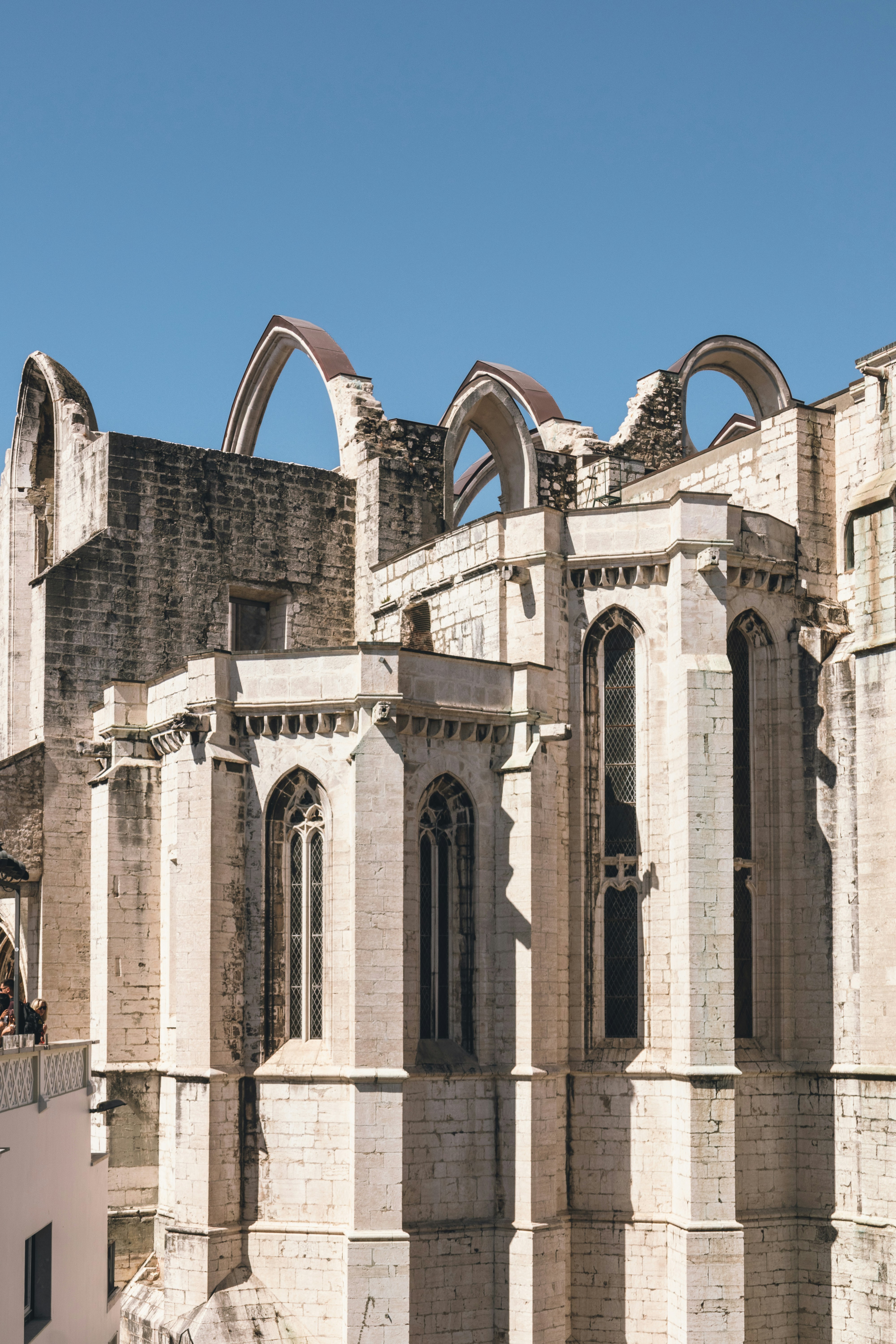
Belem and the
Bridge at Sunset.
Take Tram 15E or an Uber west along the river to Belem, about 20 minutes from the centre. This is the riverside quarter from which Vasco da Gama departed in 1497 for the sea route to India. The wealth that voyage initiated, the spice trade, the gold from Brazil, the slave trade, funded the extraordinary buildings that followed.
The Mosteiro dos Jeronimos, begun in 1501, is the finest example of Manueline architecture in Portugal: a late Gothic style unique to the country, incorporating nautical motifs, armillary spheres, and tropical imagery from the voyages of discovery into the stonework. Vasco da Gama is buried inside. Allow at least an hour.
The Mosteiro dos Jeronimos is one of the most visited buildings in Portugal. Queues for walk-in entry can be very long. Book your ticket in advance online. Check the official website for current prices and opening times before your visit.
The Torre de Belem, a fortified tower in the Tagus estuary built between 1516 and 1521, is the most photographed building in Lisbon. The Padrao dos Descobrimentos, the angular modernist monument on the waterfront, was built in 1960 for the 500th anniversary of the death of Henry the Navigator.
The original pastel de nata custard tart has been made at the Pasteis de Belem bakery on Rua de Belem since 1837, using a recipe kept secret since then. The queue moves fast. The tarts are served warm with cinnamon and icing sugar. They are noticeably different from the pastel de nata sold everywhere else in the city.
In the afternoon, walk through LX Factory: a repurposed 19th-century industrial complex on the riverside road between Belem and the Ponte 25 de Abril. Independent restaurants, bookshops, design studios, a Sunday market. It rewards an unhurried hour.
Stay in the Alcantara and Docas area as the light drops. The Docas de Alcantara is a strip of bars and restaurants on the waterfront directly below the Ponte 25 de Abril. The bridge rises directly above you, the Tagus is in front, and the light goes gold on the water before the sun drops behind the Serra de Sintra to the west.
The bridge was opened in 1966 and named after the dictator Salazar. After the Carnation Revolution of 25 April 1974, which ended 48 years of authoritarian rule in Portugal without a single death, it was renamed Ponte 25 de Abril. The resemblance to the Golden Gate Bridge is not coincidental: both are suspension bridges of similar design over wide estuaries, painted in similar colours, built in similar eras. Standing below it at dusk is one of the better ways to end an afternoon in Lisbon.
Sintra: the Mountain
of the Moon.
Take the train from Lisboa Rossio station to Sintra, about 40 minutes, very frequent throughout the day. Sintra sits in the Serra de Sintra, a range of wooded hills 25 kilometres west of Lisbon that the Moors called the Mountain of the Moon. The microclimate here is cooler and wetter than the coast, and the hills are covered in deep forest. The palaces and follies of the Portuguese royal family and aristocracy are scattered through it at different elevations, connected by steep paths and occasional buses.
Pena Palace
The extravagant Romantic palace on the highest point of the ridge, painted in yellow and red, is visible for miles around. Built for King Ferdinand II in the 1840s on the ruins of a medieval monastery, Ferdinand was a German prince (Ferdinand of Saxe-Coburg and Gotha) who arrived in Portugal as the consort of Queen Maria II and spent decades transforming the Sintra hills into his personal fantasy landscape. The palace looks like something from a fairy tale. That was the intention.
Pena Palace and Quinta da Regaleira both require advance booking and sell out in summer. Book your tickets before you travel, not on the morning you plan to go. Check the official websites for current prices and opening times. Consider arriving on the first train of the day to reach Pena Palace before the tour groups.
Quinta da Regaleira
The estate of a wealthy eccentric, built at the turn of the 20th century and saturated with Masonic, Templar, and Rosicrucian symbolism. The most visited feature is the Initiation Well: a 27-metre spiral staircase descending into the earth, designed for initiation rituals, with nine landings representing the nine circles of Dante's Inferno. The garden above is dense with grottos, tunnels, towers, and hidden passages. Allow two hours.
The Moorish Castle and the town
The Moorish Castle above the town was built in the 8th and 9th centuries during the Moorish occupation of the Iberian peninsula and captured by Afonso Henriques, the first King of Portugal, in 1147. The views from the walls on a clear day extend to the Atlantic coast.
The National Palace of Sintra in the centre of the village, recognisable by its two extraordinary conical chimneys, is the oldest surviving royal palace in Portugal, with parts dating to the 10th century. The village around it has good restaurants for lunch. Return to Lisbon in the late afternoon for a final evening in Bairro Alto or Mouraria.
The palaces are at different elevations and connected by steep paths. Wear shoes appropriate for rough, uneven ground. The buses between sites run but can be very crowded in peak season: factor in extra time. Check official websites for current ticket prices before visiting.
Practical things
worth knowing.
Getting there
Lisbon Humberto Delgado Airport (LIS) is served directly by most major and low-cost airlines. From the airport, take the Metro Red Line to Oriente station, then change to the Green or Blue Line for the city centre. The journey to Rossio takes about 30 to 35 minutes on a standard Metro ticket. Check the current fare at the airport machines before travelling. Taxi from the airport to the centre takes 20 to 30 minutes depending on traffic.
Getting around
The Metro covers the main areas quickly. In the old city, trams and funiculars (elevadores) are part of the experience: Tram 28 runs through Alfama and Graca and is the most scenic route in the city, though crowded with tourists in peak season. The yellow funiculars, Elevador da Bica and Elevador da Gloria, connect the Baixa to the hilltop neighbourhoods. Walking is rewarding but the hills are genuinely steep: pacing yourself matters.
Fado
Fado is the traditional music of Lisbon, born in Alfama: a form of melancholic song associated with saudade, a Portuguese word for a longing for something absent or lost. Not every fado house is the same. The tourist-facing venues near the top of Alfama are expensive and performative. Smaller tascas in Mouraria and the backstreets of Alfama, with local audiences, are more authentic. Ask your accommodation for a recommendation rather than booking the first result you find online.
Food
Bacalhau (salt cod): Portugal has an estimated 365 recipes for salt cod, one for every day of the year. The most straightforward is bacalhau a bras, shredded salt cod with eggs, onion, and crisped potato: simple and very good. Pasteis de nata: the custard tart is the most visible Portuguese food export, but is best eaten warm in Lisbon, not cold from a supermarket shelf abroad. Bifanas: pork sandwiches from a street counter, cheap and excellent, the proper street food of Lisbon. Petiscos: Portuguese small plates, similar in concept to tapas, the right way to eat in a tasca. Ginjinha: cherry liqueur, drunk in a small glass (sometimes made of chocolate) from the bars around Rossio. Vinho verde: the young, slightly sparkling white wine from the Minho region in the north. Cold, light, low alcohol, and very good with seafood.
Your 3-day Lisbon
itinerary at a glance.
Walk Lisbon with
a guide in your pocket.
The Stepcast Lisbon tour covers the historic core from the earthquake-rebuilt Baixa up through Alfama to the castle, with audio and written commentary at each stop. No booking, no group, no fixed start time. Go at your own pace and stop when you want. First 3 stops completely free.
Try the Lisbon tour for free →